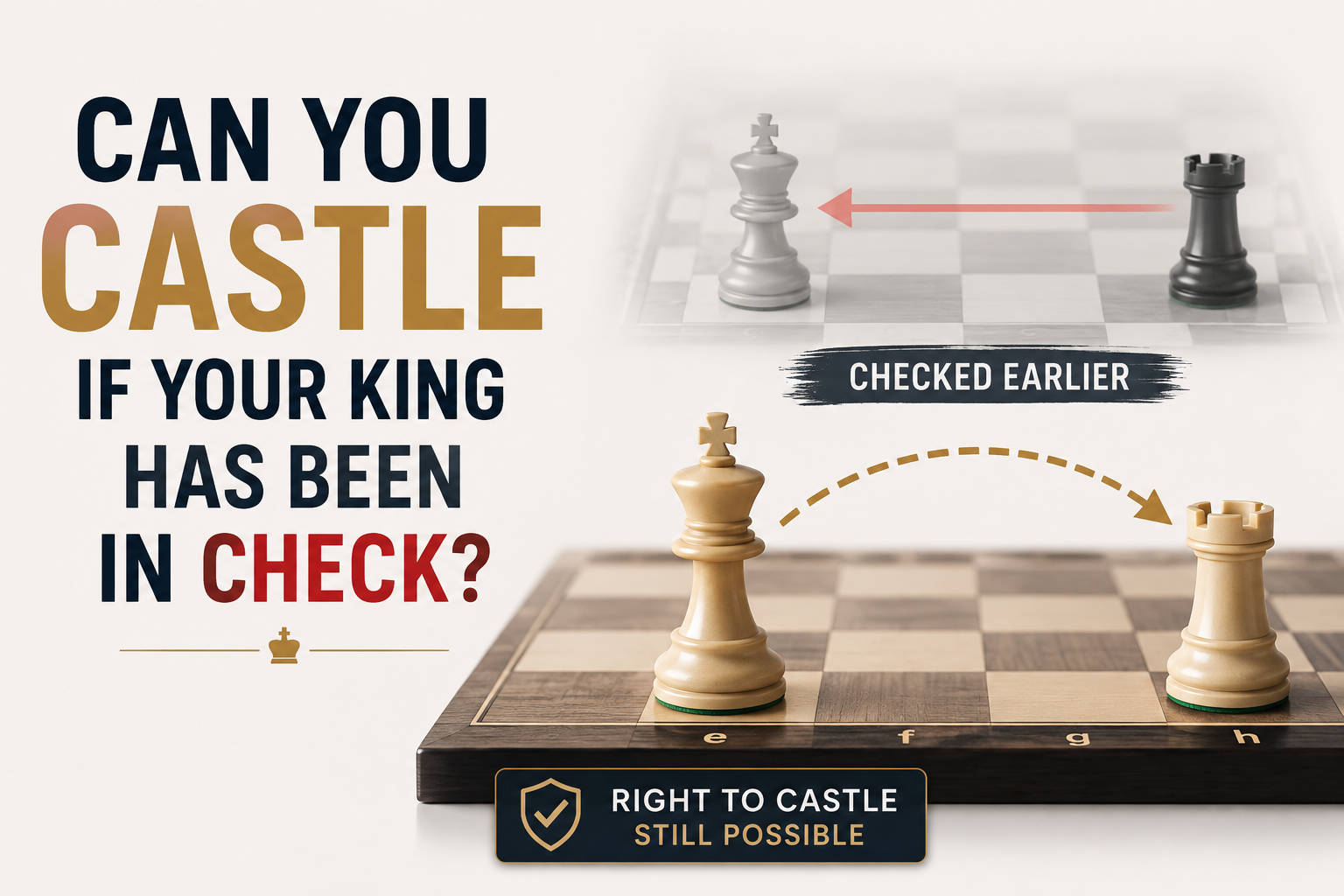
Can you castle if your king has been in check? Yes, you can. Being in check earlier in the game does not automatically take away your right to castle.
What matters is whether your king has moved.
If your king was checked but you dealt with the check without moving the king, you may still be able to castle later, provided all the other castling conditions are satisfied.
Can You Castle If Your King Has Been in Check?
This is where the confusion usually starts.
When a king is in check, the player must make a legal move that gets the king out of danger. But that does not necessarily mean the king itself has to move.
For example, a player could respond to a check by:
- Blocking the attacking piece
- Capturing the attacking piece with another piece
- Moving the king to a safe square
Only the third option moves the king.
That distinction matters because FIDE’s Laws of Chess specifically state that the right to castle is lost if the king has already moved. They do not say that simply having been in check permanently removes the castling right.
What If the King Was Checked Earlier?
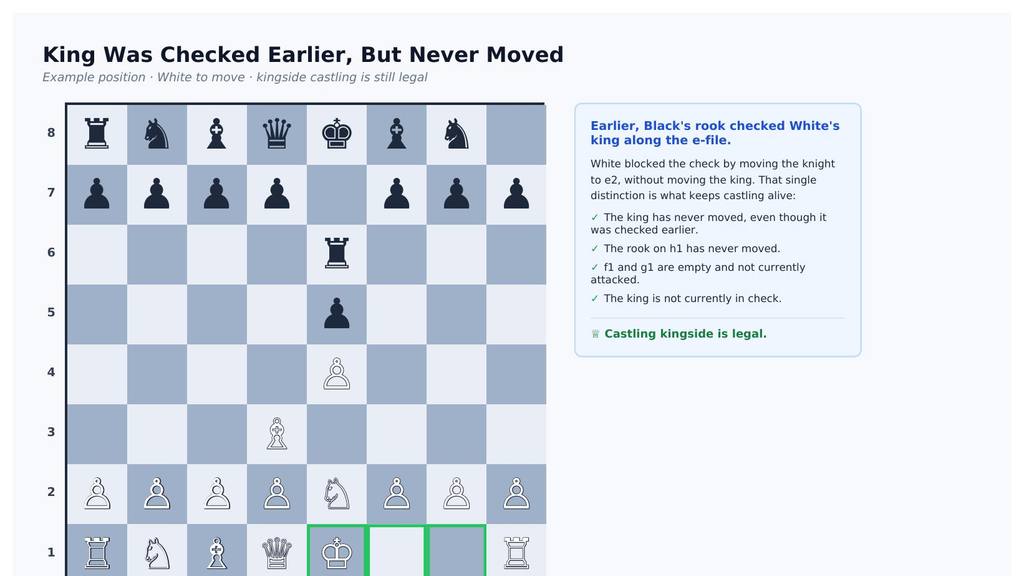
Suppose your king started on e1 and was placed in check by an enemy rook.
You respond by moving a piece between the rook and your king. Your king stays on e1.
Later in the game, the path between your king and rook is clear, and none of the squares involved in castling are under attack.
If the king and the rook have never moved, castling can still be legal.
The important point is that the king survived a check without moving.
But What If the King Moved to Escape Check?
Then castling is no longer possible with that king.
FIDE Article 3.8.2.1 states that the right to castle is lost if the king has already moved. This remains true even if the king later returns to its original square.
So:
Checked but king stayed put: Castling may still be possible.
Checked and king moved: Castling is no longer possible.
What If the King Is in Check Right Now?
That’s different.
You cannot castle while your king is currently in check.
FIDE’s rules also prevent castling if the square where the king starts, crosses, or finishes is attacked by an opponent’s piece.
So even if your king has never moved, you must first make sure the current position allows castling.
The Three Squares That Matter
For kingside castling, think about:
e1 → f1 → g1
For queenside castling:
e1 → d1 → c1
The king cannot currently be in check, cannot cross an attacked square, and cannot finish on an attacked square.
There must also be no piece between the king and the rook.
The Simple Rule to Remember
Don’t ask:
“Has my king ever been in check?”
Ask:
“Has my king ever moved?”
Being in check does not automatically destroy your castling rights.
Moving the king does.
And even if the king has never moved, you still need to check the position at the moment you want to castle.
FIDE Rule
The relevant rules are found in Article 3.8.2 of the FIDE Laws of Chess, which covers when the right to castle is lost and when castling is temporarily prevented.
Leave a Reply