Intro:
Chess rules can get surprisingly complicated when a specific situation comes up.
Here you’ll find clear explanations of tricky rules, unusual positions, and common situations that can cause confusion during a game.
Explore Chess Rules
-
What Is the Difference Between a Blunder and a Mistake in Chess?
Read more: What Is the Difference Between a Blunder and a Mistake in Chess?A mistake makes your position worse, while a blunder is usually a much more serious error that can lose material, the position, or even the game.
-
What Is a Zugzwang in Chess?
Read more: What Is a Zugzwang in Chess?A zugzwang happens when a player would prefer to pass, but must move—and that required move makes their position worse.
-
What Is Stalemate in Chess?
Read more: What Is Stalemate in Chess?Stalemate happens when the player to move has no legal move but their king is not in check. The result is a draw.
-
Can a Pawn Become a Queen in Chess?
Read more: Can a Pawn Become a Queen in Chess?Yes, a pawn can become a queen through promotion, but a queen is not the only piece a pawn can become.
-
What Is En Passant in Chess?
Read more: What Is En Passant in Chess?En passant is a special pawn capture that can happen immediately after an opponent advances a pawn two squares from its starting position.
-
What Is the Difference Between Discovered Check and Double Check?
Read more: What Is the Difference Between Discovered Check and Double Check?A discovered check reveals an attack from another piece, while a double check means the king is attacked by two pieces at the same time.
-
What Is a Discovered Check in Chess?
Read more: What Is a Discovered Check in Chess?A discovered check happens when one piece moves away and reveals another piece’s attack on the opponent’s king.
-
Can You Block a Rook Check?
Read more: Can You Block a Rook Check?A rook check can sometimes be blocked when there are squares between the rook and the king. Learn how to spot the blocking opportunity.
-
Can You Block a Bishop Check?
Read more: Can You Block a Bishop Check?A bishop check can sometimes be blocked, but only when there is at least one square between the bishop and the king.
-
Can a King Capture a Checking Piece?
Read more: Can a King Capture a Checking Piece?A king can capture a checking piece only if the destination square is not attacked by another enemy piece.
-
Can You Block a Pawn Check?
Read more: Can You Block a Pawn Check?You cannot block a pawn check because pawns attack diagonally onto adjacent squares. Learn how to respond when a pawn checks your king.
-
Can You Block a Knight Check?
Read more: Can You Block a Knight Check?You cannot block a knight check because knights jump directly to their target squares. Learn how to respond when a knight attacks your king.
-
Can You Capture the Piece Giving Check?
Read more: Can You Capture the Piece Giving Check?You can sometimes capture the piece giving check, but the capture must leave your king safe. Learn when this response is legal and when it fails.
-
Can You Castle? A Simple Chess Castling Checklist
Read more: Can You Castle? A Simple Chess Castling ChecklistNot sure whether castling is legal? Use this simple checklist to check every condition before making the move.
-
What Is the Difference Between Check and Checkmate?
Read more: What Is the Difference Between Check and Checkmate?Check means the king is under attack but has a legal escape. Checkmate means the king is in check with no legal way to escape.
-
Does the King Have to Move When in Check?
Read more: Does the King Have to Move When in Check?Being in check does not always mean the king has to move. Learn the three ways a player can legally respond to check.
-
Can a King Capture a Protected Piece?
Read more: Can a King Capture a Protected Piece?A king can capture an opposing piece only if the destination square is not protected by another enemy piece.
-
Can You Castle If There Is a Piece Between the King and Rook?
Read more: Can You Castle If There Is a Piece Between the King and Rook?Moving your king even once permanently removes your castling rights, even if the king later returns to its original square.
-
Can You Castle If Your King Has Moved Back?
Read more: Can You Castle If Your King Has Moved Back?Moving your king even once permanently removes your castling rights, even if the king later returns to its original square.
-
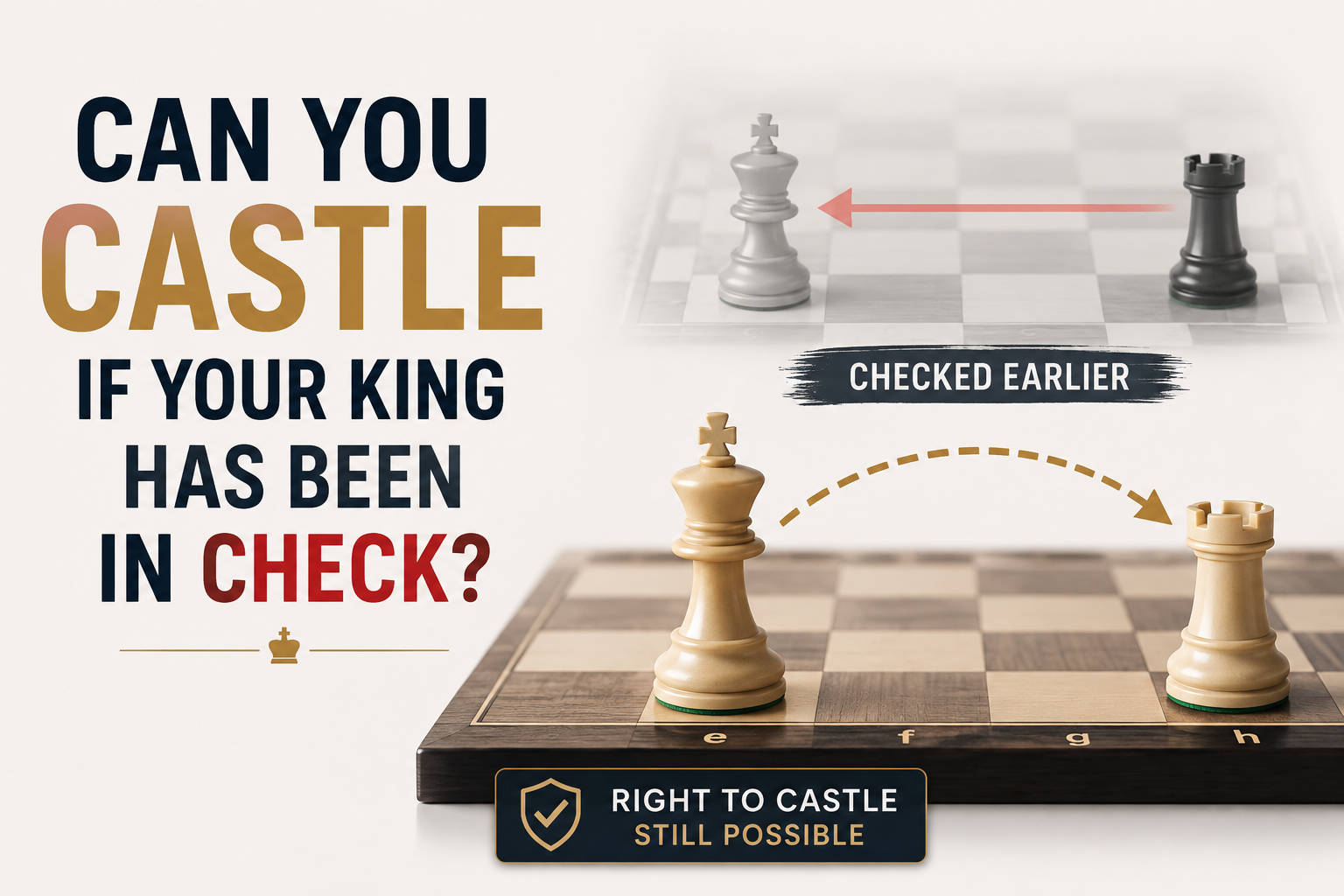
Can You Castle If Your King Has Been in Check?
Read more: Can You Castle If Your King Has Been in Check?Being in check earlier does not automatically remove your castling rights. Learn when you can still castle, what happens if your king moved, and which squares must be safe.
-
Can You Castle Through Check? Here’s the Rule
Read more: Can You Castle Through Check? Here’s the RuleYou cannot castle through check. Learn which squares the king must avoid, why the rule exists, and how to tell when castling is legal.
-
Can You Castle If Your Rook Is Under Attack?
Read more: Can You Castle If Your Rook Is Under Attack?Can you castle if your rook is under attack? Yes, you can — an attacked rook doesn’t automatically prevent castling. What actually matters is whether the king is in a position that satisfies the castling conditions; an opponent merely attacking your rook doesn’t, by itself, change that. Why the Rook Being Attacked Doesn’t Stop Castling…