Category: Chess Rules
-
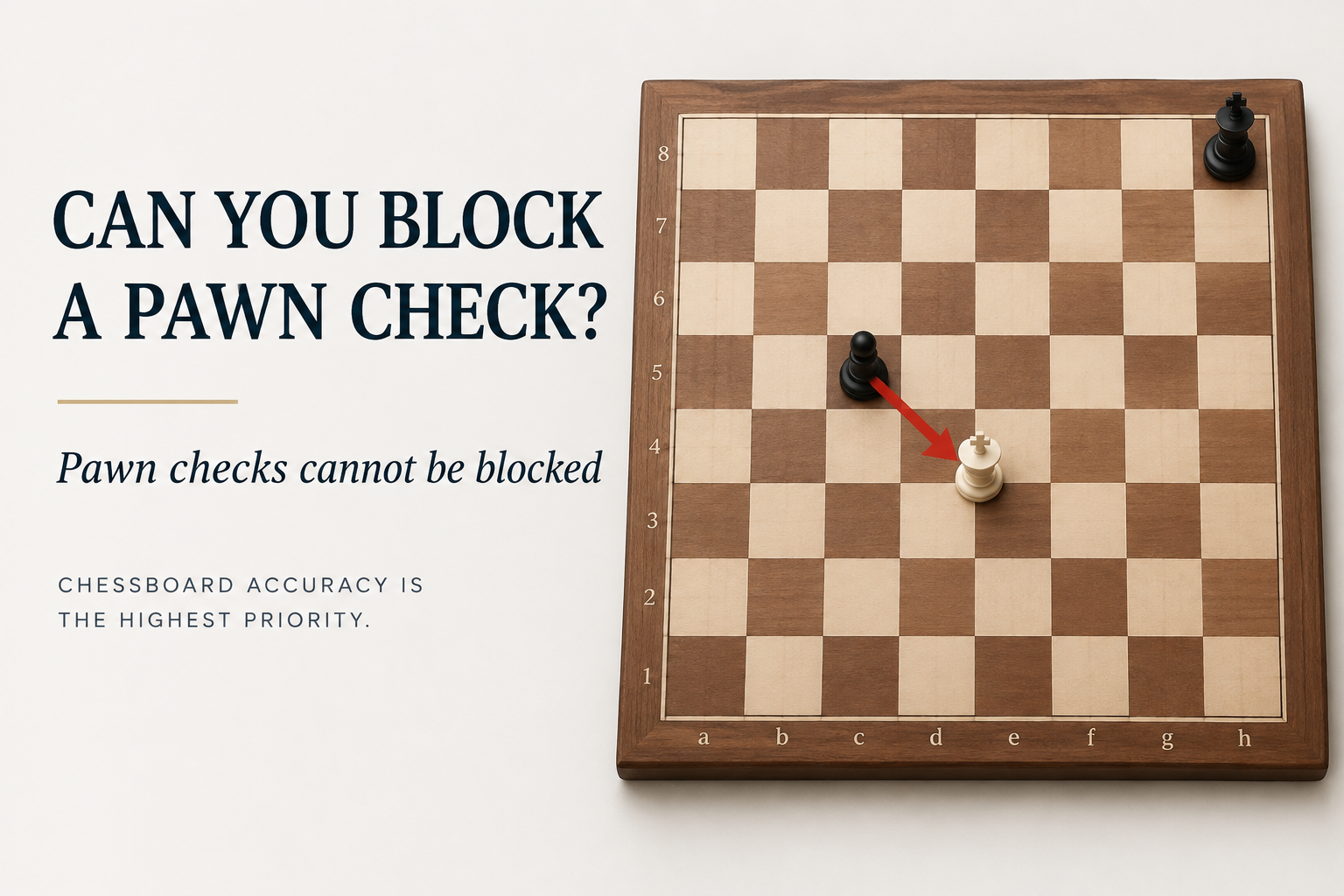
You cannot block a pawn check because pawns attack diagonally onto adjacent squares. Learn how to respond when a pawn checks your king.
-
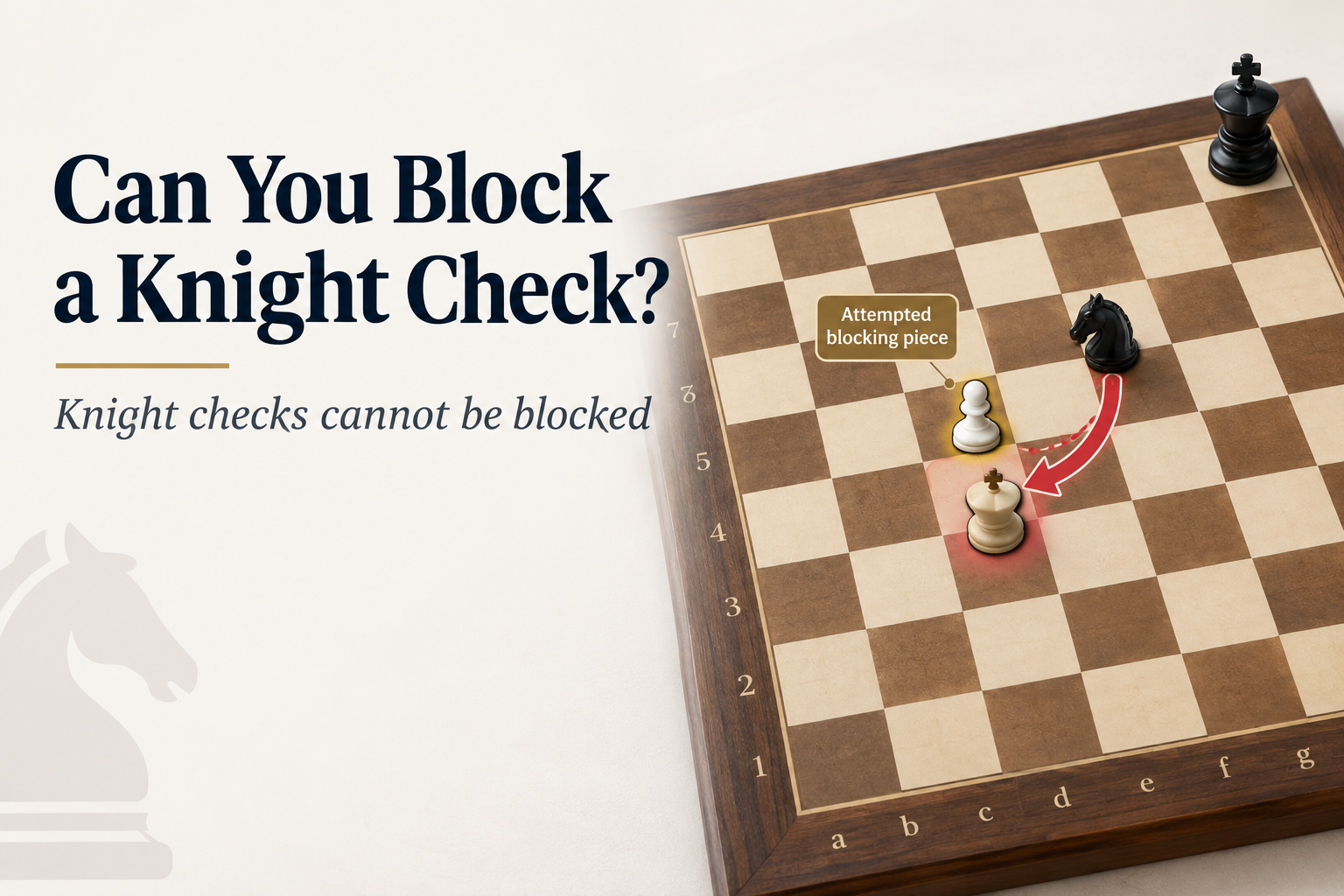
You cannot block a knight check because knights jump directly to their target squares. Learn how to respond when a knight attacks your king.
-
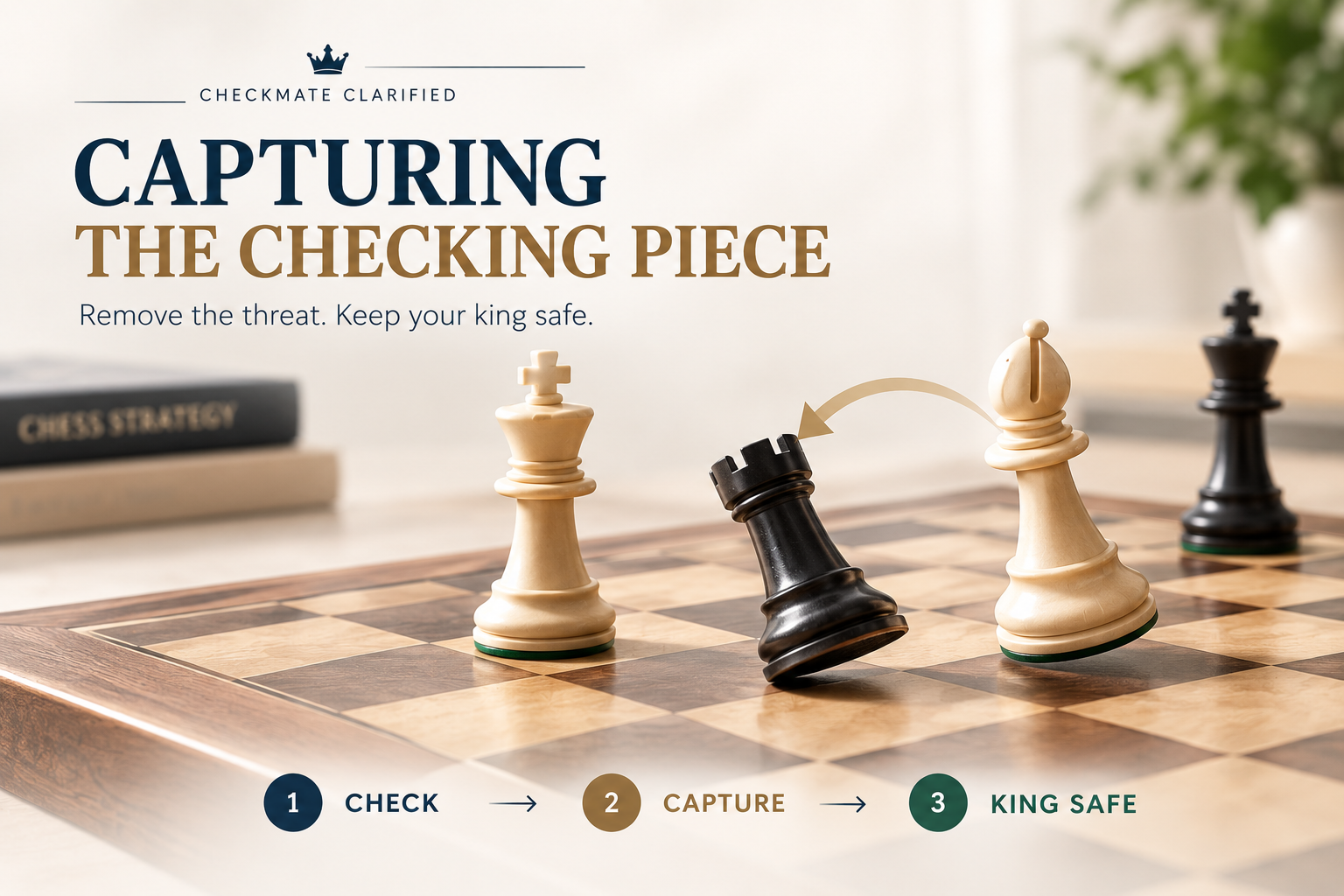
You can sometimes capture the piece giving check, but the capture must leave your king safe. Learn when this response is legal and when it fails.
-
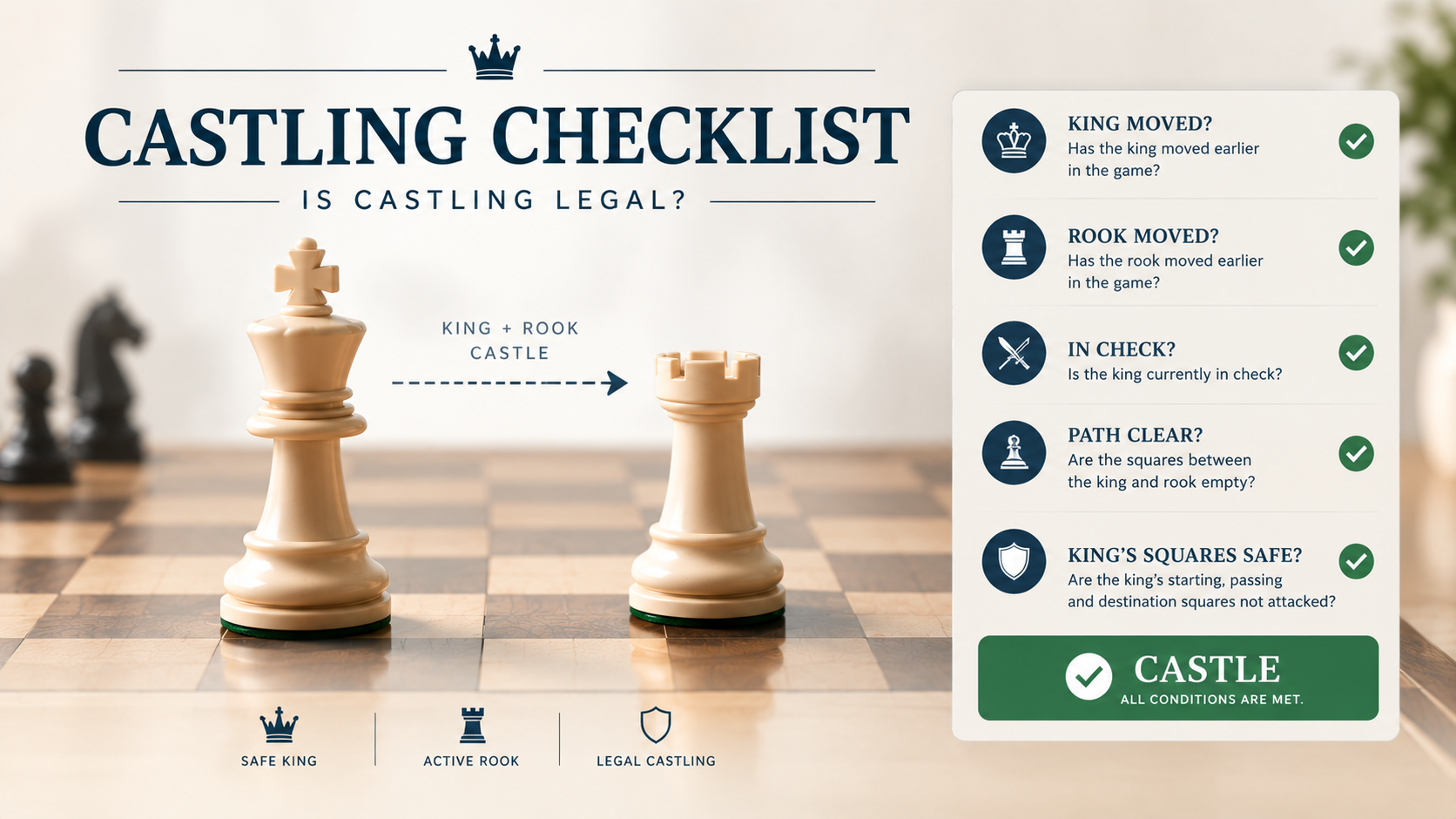
Not sure whether castling is legal? Use this simple checklist to check every condition before making the move.
-
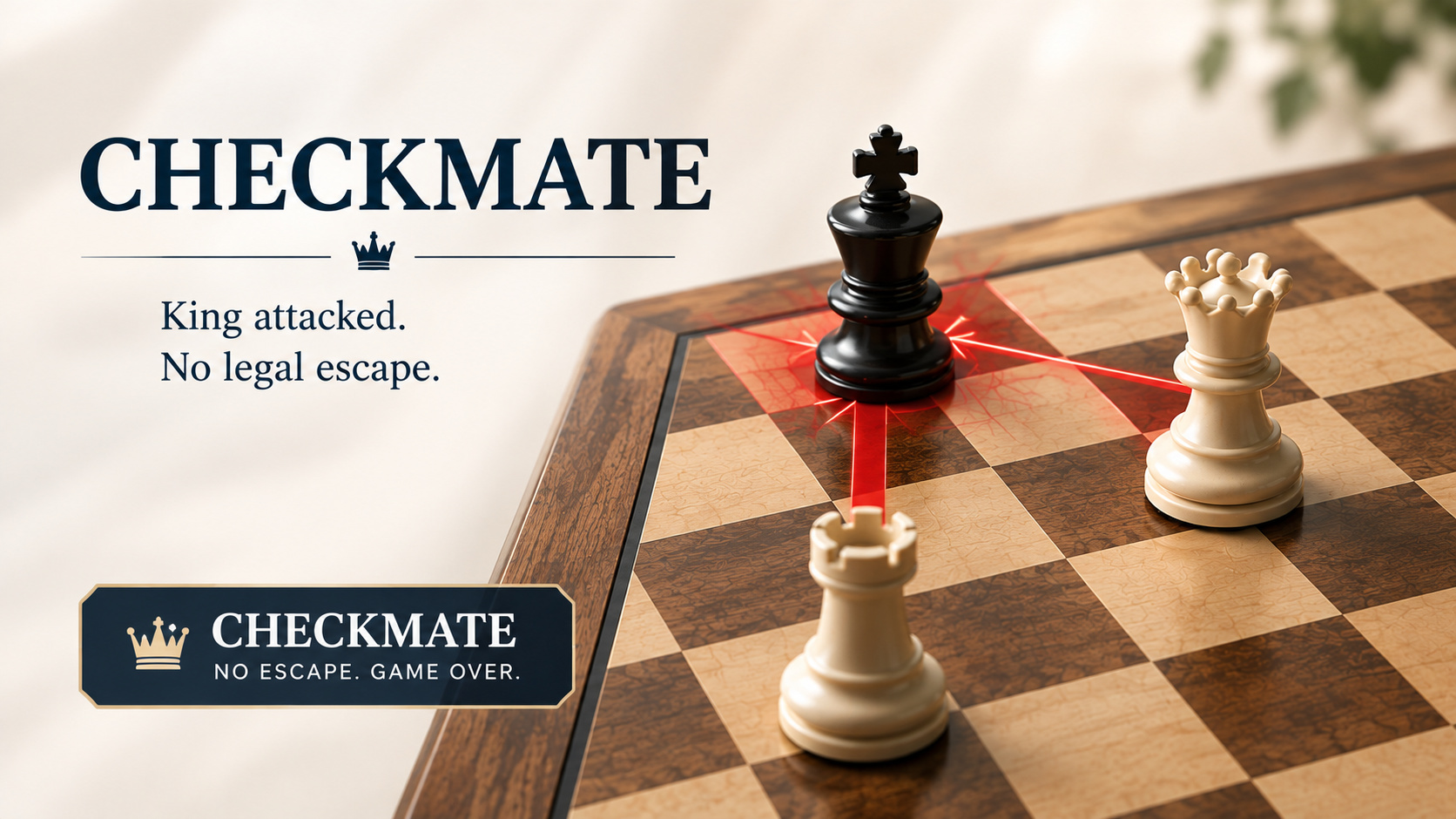
Check means the king is under attack but has a legal escape. Checkmate means the king is in check with no legal way to escape.
-
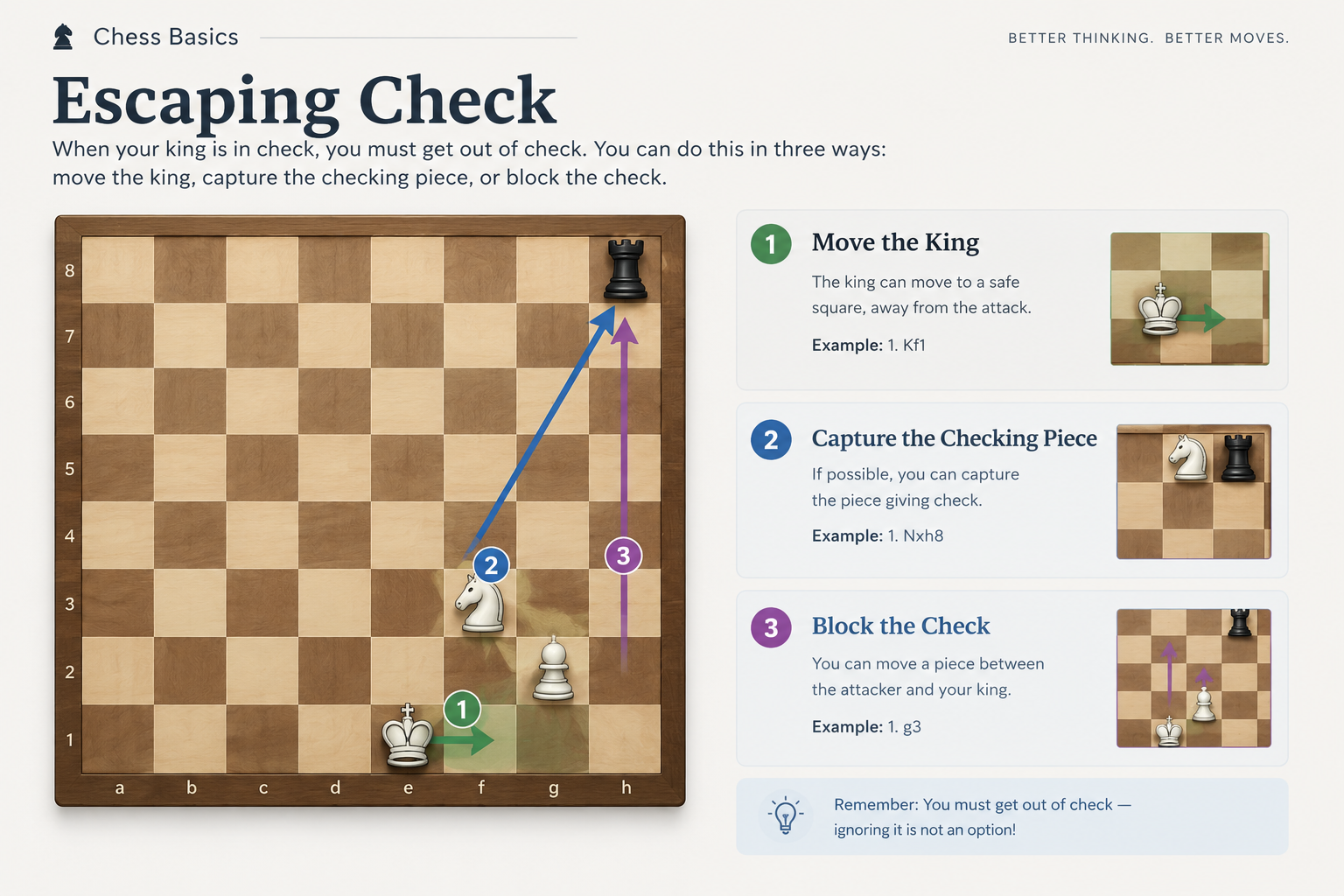
Being in check does not always mean the king has to move. Learn the three ways a player can legally respond to check.
-
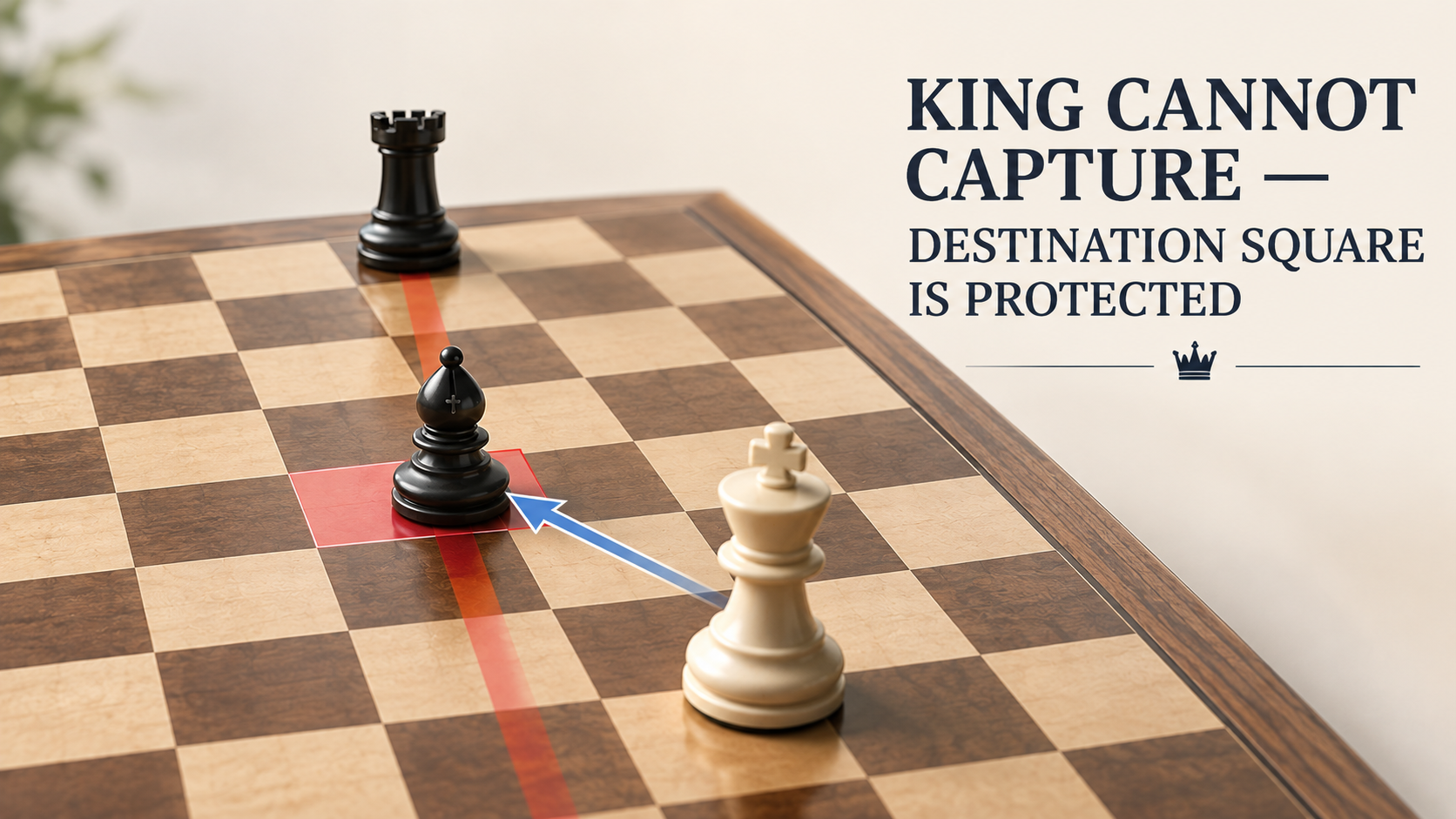
A king can capture an opposing piece only if the destination square is not protected by another enemy piece.
-
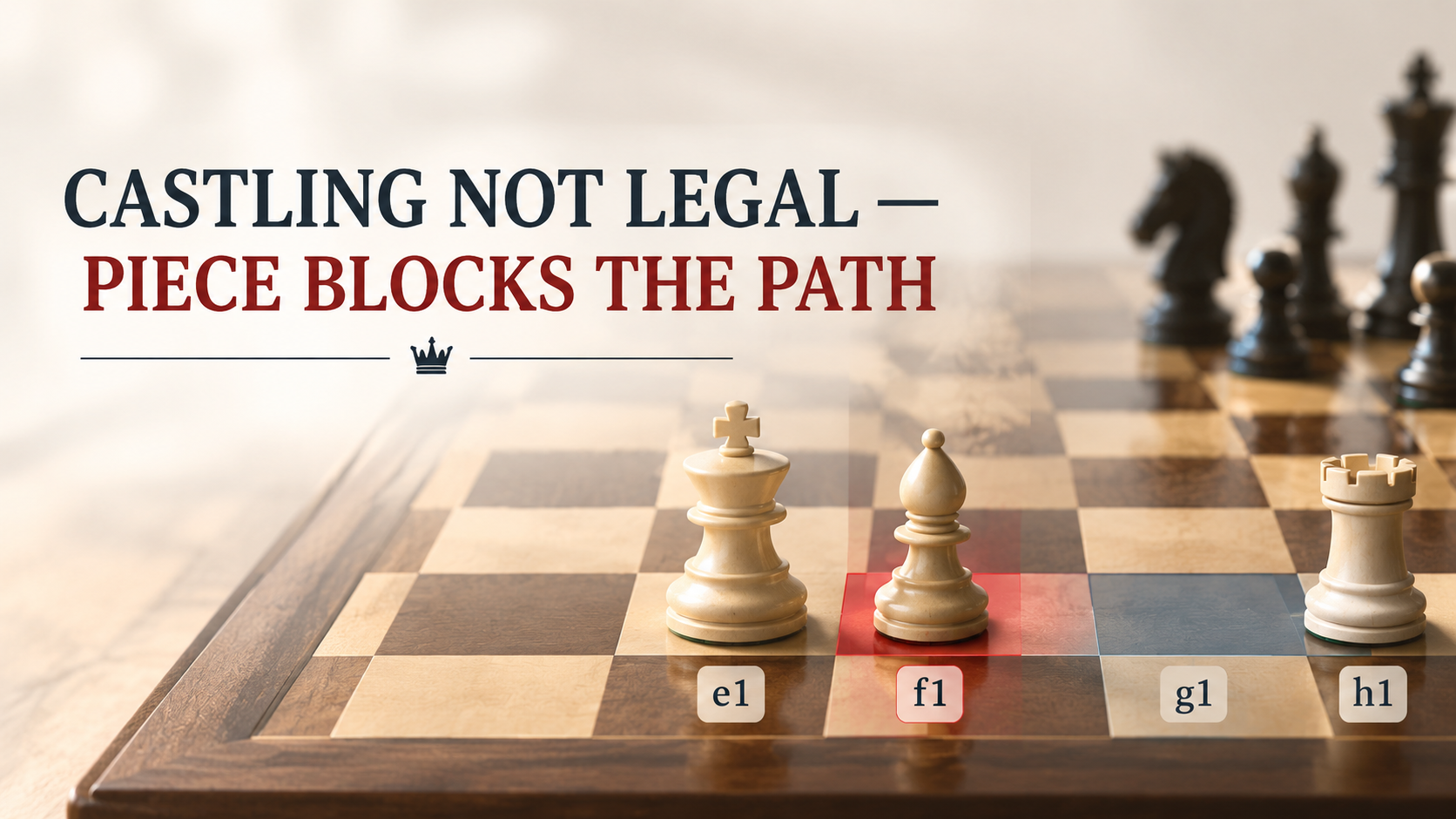
Moving your king even once permanently removes your castling rights, even if the king later returns to its original square.
-
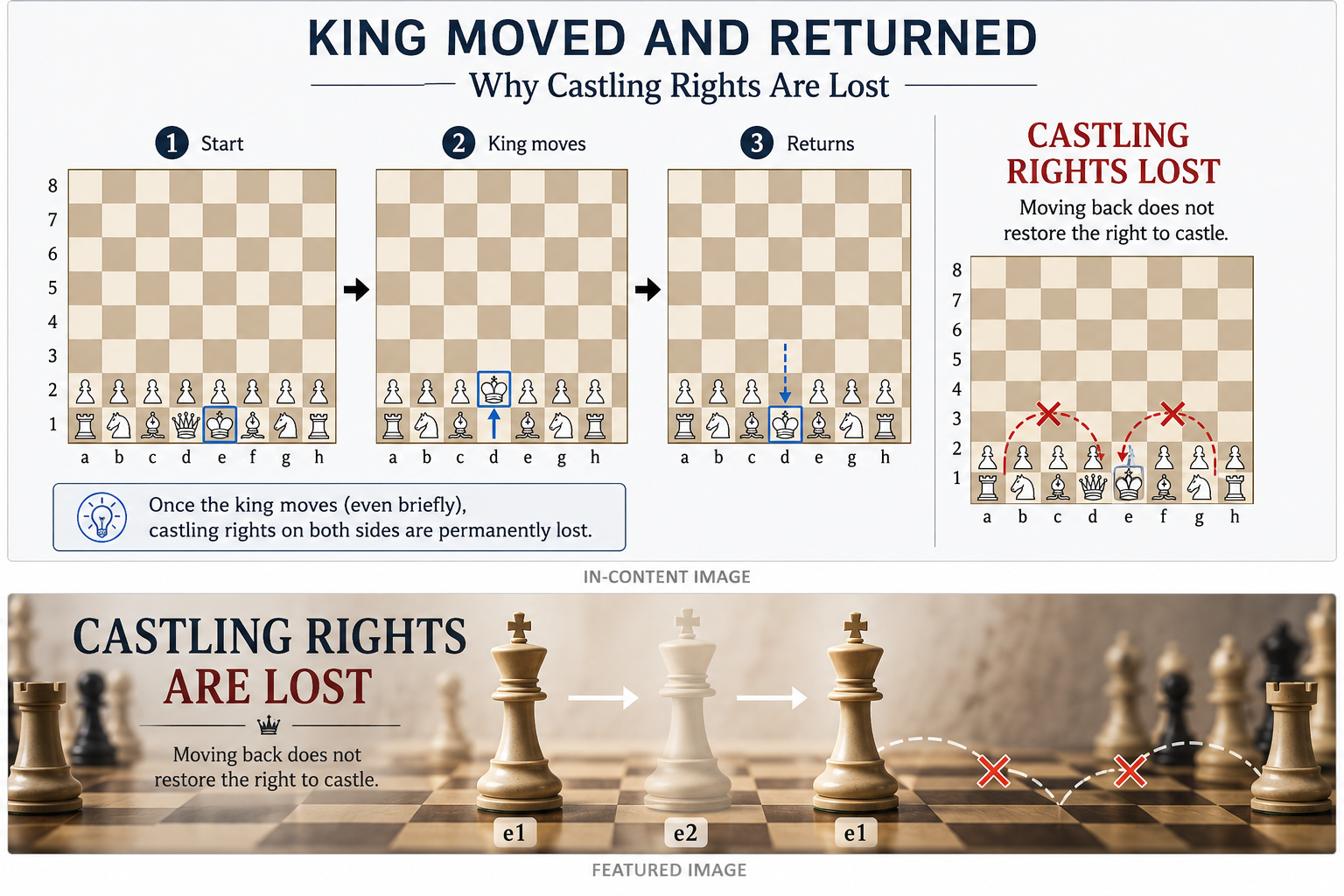
Moving your king even once permanently removes your castling rights, even if the king later returns to its original square.
-
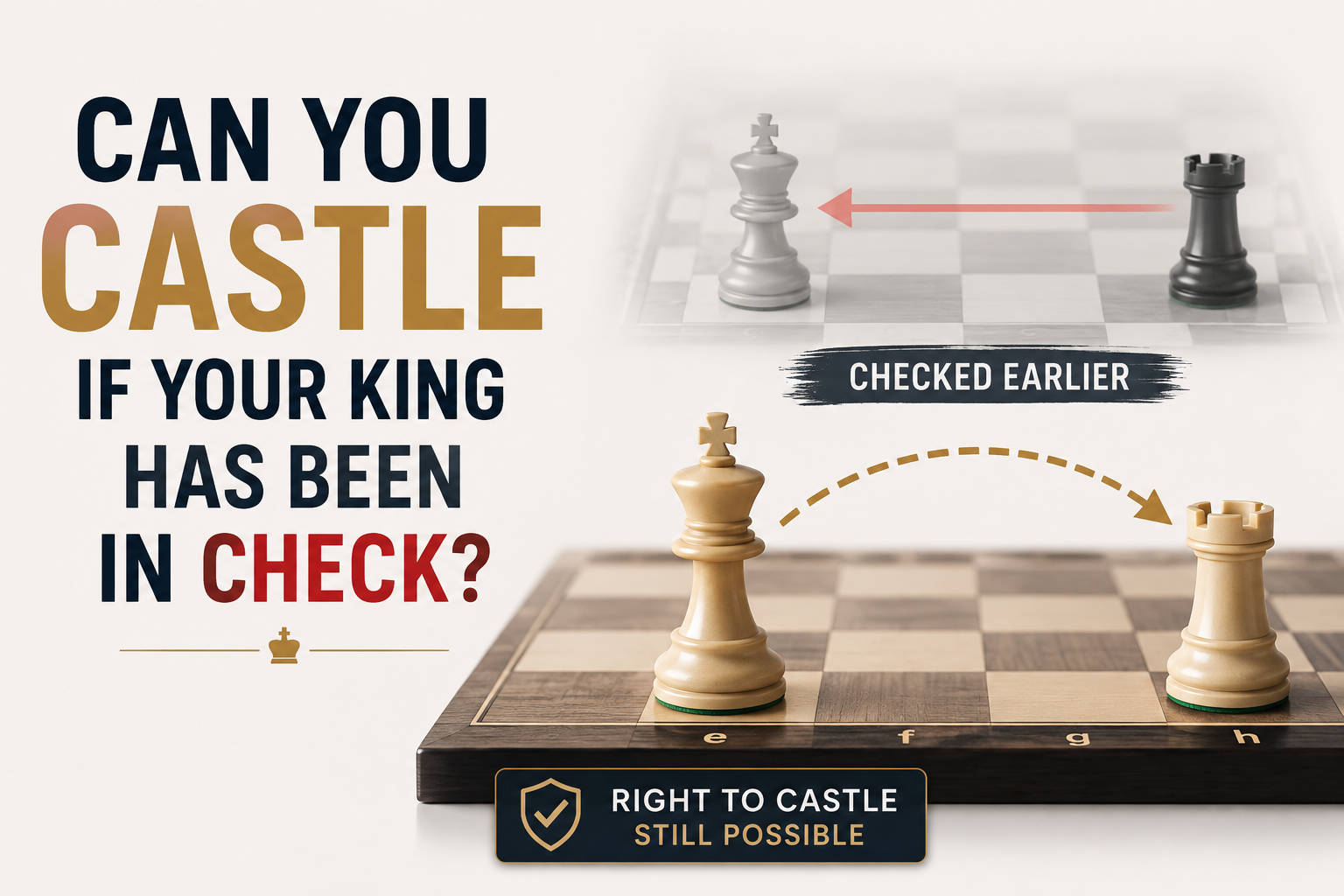
Being in check earlier does not automatically remove your castling rights. Learn when you can still castle, what happens if your king moved, and which squares must be safe.